
Pomona's City Directory Shelf
Pomona Public Library Special Collections is the local anchor for city phone books, directories, genealogy, microforms, CDs, and periodicals. Its collection policy describes directories from the late 1890s through the present, with 1896 to 1945 microfilmed. That statement confirms the range and format, not an unbroken annual run. A good city directory search checks the edition itself and records every gap.
| Collection | Years | Where Held | Access |
|---|---|---|---|
| Pomona city and phone directories | Late 1890s to present; 1896-1945 microfilmed | Pomona Public Library Special Collections | Appointment; digital availability varies |
| Milliken's Pomona directory | 1896-97 | FamilySearch Library and catalogs | Account or affiliate-library limits may apply |
| Multi-city directory microfilm | 1931-34; 1937/38-40; 1945-48 | Gale sets and holding libraries | Library or microfilm access |
| Digitized Pomona directories | Edition-specific | Internet Archive search collection | Free online discovery; edition rights vary |
| Historical Society site files | Local-history range | Historical Society of Pomona Valley | Contact the society |
The multi-city run has known holes: 1932 and 1933 are missing, 1939 is missing, and 1946 and 1947 are missing in the listed sets. Those gaps are evidence about the collection, not proof that no Pomona directory existed that year.
Milliken Starts Pomona's Directory Trail
Pomona's directory story starts with Milliken's City Directory of Pomona for 1896 to 1897. The early volume gives the search a named object and a local frame. Later books can include a wider group of communities, so a surname hit must be checked against the Pomona heading, street, and nearby place names. A city directory entry becomes stronger when the same address or household clue appears in another edition.
The surviving run also tells a local history story. A directory can place a clerk, cement worker, dressmaker, retiree, or business at a street as Pomona developed from citrus and railroad roots into a larger commercial, educational, manufacturing, and fair city. Occupation lines are historical clues and namesake checks. They are not a current role directory.
Note: Photograph the volume title page and abbreviation key before copying entries, because publisher and symbol rules change by edition.
Digitized Pomona Directories Online
The digitized collection is a discovery route for people who cannot begin at the library shelf. Search the Internet Archive Pomona directory collection by title, year, and volume. Digital access can differ by edition or rights status, so a result that has a scan is not the same as a promise that every page will open without an account or library relationship.
Use the scan like a paper volume. Start in the alphabetical section, copy the exact spelling and address, then look for a street or reverse section. Note whether an entry names a spouse, occupation, employer, owner, or householder. A directory search that jumps straight to a guessed street can miss a surname variant or a multi-city section.
The captured search result shows the online shelf where digitized Pomona volumes can be found.
Open the digitized Pomona directory search to check the current edition list.
The result page is a finding aid. The volume itself supplies the names, pages, symbols, and local context.
Known Pomona Editions Through 1951
Local historic-resource research documents individual Pomona editions in 1896, 1898, 1903, 1907, 1909, 1911, 1914, 1916, 1919, 1922, 1926, 1931, 1940, 1945, 1948, and 1951. The list is useful because it shows both the depth of the record and the unevenness of survival. It should not be rewritten as a claim that every year between those dates is held.
| 1896-97 | Milliken's City Directory of Pomona, the named early volume |
|---|---|
| 1898-1926 | Surviving individual editions include 1898, 1903, 1907, 1909, 1911, 1914, 1916, 1919, 1922, and 1926 |
| 1931-1940 | Known editions include 1931 and 1940, with multi-city microfilm gaps |
| 1945-1951 | Known editions include 1945, 1948, and 1951 |
When a target year is absent, move to the nearest edition on each side rather than treating the gap as a break in residence. A move, death, omission, publication lag, or spelling shift can all create a blank. A city directory timeline is strongest when it preserves the missing years as part of the result.
How a Pomona Entry Reads
A Pomona city directory entry can combine more evidence than a simple name list. The documented Center Street material includes a person, spouse or household association, occupation, employer, and street address. “r” and “h” are common shorthand in directory work, but the volume's own key controls the meaning. Some editions mark owner or householder status; others do not. Copy the printed line before interpreting it.
| Name | Head of household or listed adult, with initials and spelling as printed |
|---|---|
| Spouse or household clue | May appear in parentheses, beside a spouse, or in a widow notation |
| Occupation | Work description and sometimes an employer or business |
| Address | House number and street; a symbol may distinguish residence or boarding |
| Owner or householder mark | Edition-specific symbol that must be read with the front-matter key |
- Criss-cross section
- The street-order half of a directory, used to find occupants by address.
- Householder index
- An index or list that points to the principal adult associated with a residence.
- Abbreviation key
- The volume's own guide to marks, occupations, residence, boarding, and household notation.
- Directory year
- The edition date, which may reflect publication timing rather than a single day of residence.
Center Street Across Eleven Editions
Pomona's documented 554 W. Center Street example shows why a city directory can serve family history. Matthew D. Gantenbein and Anna D. appear across 1907, 1911, 1914, 1916, 1919, 1922, 1931, 1940, 1945, 1948, and 1951. Other entries at that address include Cyrus Lewis, listed as retired in 1898; Miss Francis Lewis, a dressmaker in 1898; Dawson Spence, a clerk at Bradley & Russell in 1903; Frank Arnold, a clerk at Saddle Rock Rest in 1907; and John King, a plaster and cement worker in 1909.
This is a human-use clue, not a claim that one family occupied the address without interruption. Compare the exact line, address, spouse notation, and occupation each time. A change can signal a move, death, a new household, or a publication omission. The Historical Society of Pomona Valley can add site files and community context to the printed line.
The society's history and holdings are summarized in its local collection overview.
Visit the Historical Society of Pomona Valley before assuming a site file or burial record is held at the library.
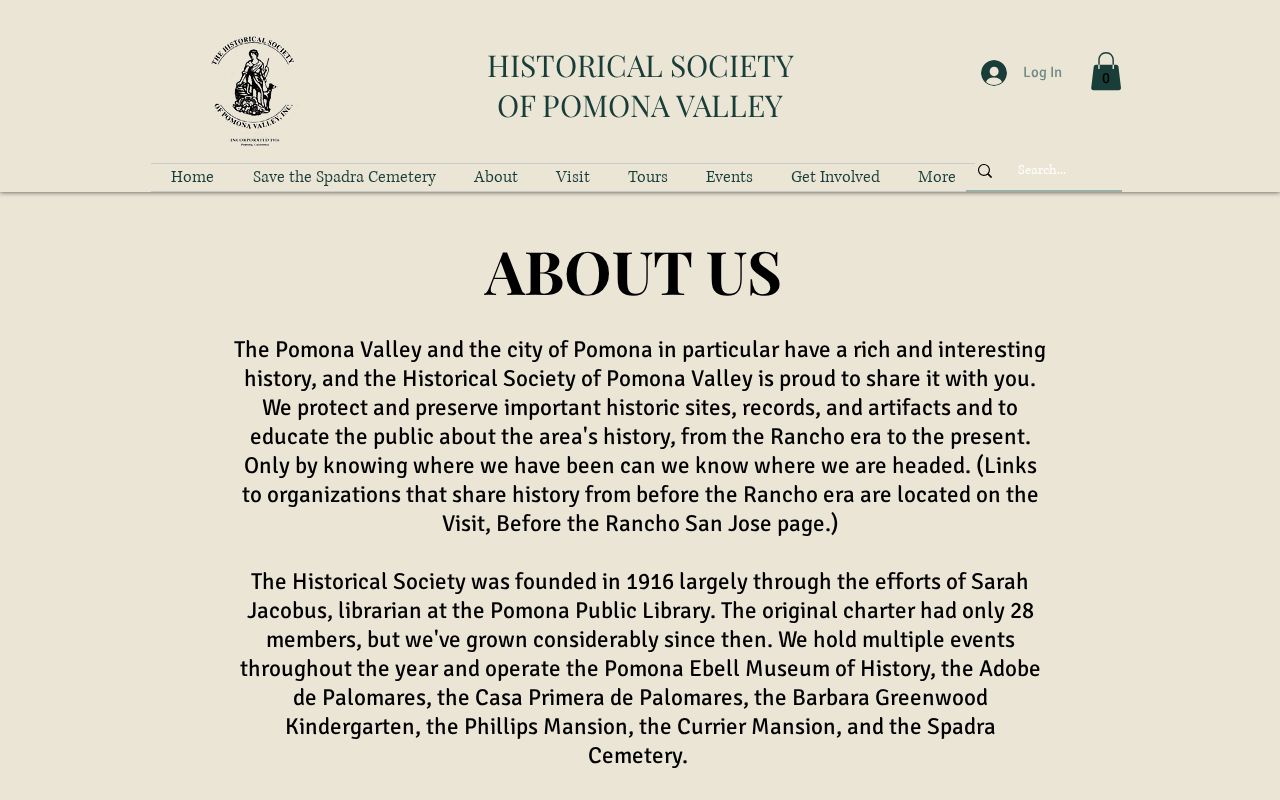
The society's properties, community records, and Spadra Cemetery material can help explain an entry without replacing the directory source.
Pair Pomona Directories With Census
Directory years and census years answer different parts of a household question. The federal census supplies household members, ages, relationships, occupation, and tenure at the enumeration location. The National Archives releases census schedules under a 72-year rule, so the currently public federal run reaches through 1950. A directory can fill the years between census points and provide a street clue for finding the right household.
- Copy the directory name, address, spouse notation, occupation, and employer exactly.
- Check the nearest released census and compare household members, ages, relationships, and street or enumeration clues.
- Use the next directory edition to test whether the person stayed, moved, or disappeared.
- Search newspaper, probate, obituary, and cemetery sources when a death or family change is plausible.
- Keep alternate spellings and neighboring occupants in the research notes instead of choosing one name too soon.
The census is not a replacement for a city directory. A directory can be annual or near-annual, while a census is a periodic household snapshot. Together they make a better timeline.
The National Archives census research page explains the public release framework.
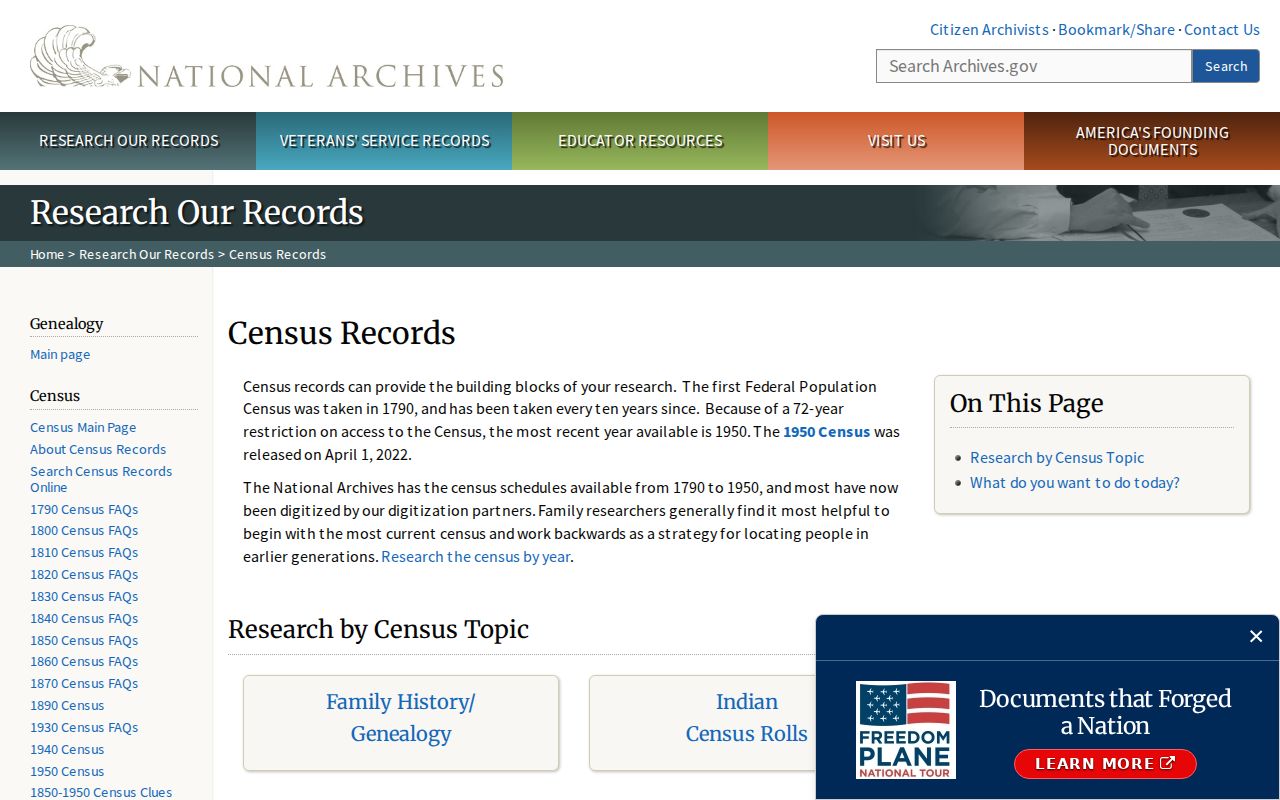
Pair the census household with the directory street line, then use deeds or probate only when the address history calls for them.
Multi-City Volumes Need Place Checks
Later directory publishers often grouped Pomona with neighboring communities. A surname result in a multi-city city directory can therefore belong to Claremont, La Verne, or another nearby place. Read the city heading, street, house number, and surrounding entries before attaching it to Pomona. A postal label alone is not enough to decide the jurisdiction.
Pomona's place check also sits inside Los Angeles County's broader records geography. County boundaries, city annexations, and nearby communities can shape how a directory entry is cataloged, so preserve the printed place heading before joining it to a county deed, census schedule, or court record.
Pomona's edge geography makes this check important. The city sits near Diamond Bar, Industry, Walnut, Claremont, La Verne, and San Bernardino County. If a street name changed, an address was annexed, or a parcel sits near the boundary, compare the county map and the edition's place index. That step prevents a real entry from becoming the wrong local entry.
Note: Use the city directory's own place headings and abbreviation key before treating a nearby address as a Pomona result.
Pomona Special Collections Access
Pomona Public Library is at 625 S. Garey Ave. and lists 909-620-2043 and library@pomonaca.gov. Published regular hours are Monday through Thursday noon to 7 p.m. and Saturday 11 a.m. to 5 p.m. Special Collections is appointment-only, so call or email before traveling. The Curtis Genealogical Collection, formed with the Pomona Valley Genealogical Society, contains about 4,000 books plus microforms, CDs, and periodicals.
The library's history also gives the shelf a local frame. It began in 1887 with 400 books, moved into a Carnegie library in 1903, expanded in 1912 and through a WPA project in 1939, and moved to its current building in 1965. Its Frasher Foto project digitized more than 5,000 representative postcard images, giving directories a visual street and building context. A 2026 library agenda discussed retrieval or repatriation of Historical Society materials, so confirm custody with both institutions before assuming that a named item is in one building.
The Pomona Library history and genealogy page is the best starting point for current collection details.
Trace Pomona Families Through Directories
Family history work is strongest when a city directory supplies the address and a second record explains the person. Start with a surname, then copy the entry's spelling, house number, spouse clue, occupation, and employer. Move one edition earlier and later. Switch to the criss-cross section to see who else was listed on the street. Pair the nearest directory years with the 1940 and 1950 census, then test a disappearance against an obituary, probate file, or cemetery roster.
- Find the first Pomona appearance and record the page, edition, and exact printed line.
- Follow the name across surviving editions, keeping all addresses and variants.
- Read the street section and compare adjacent occupants or businesses.
- Match the household to the nearest public census and check ages or relationships.
- Close a former-household question with newspaper, probate, obituary, or Spadra Cemetery evidence.
When a person vanishes, the explanation may be a move, death, omission, or publication lag. A city directory is most honest when it preserves uncertainty and names the next record that could resolve it.